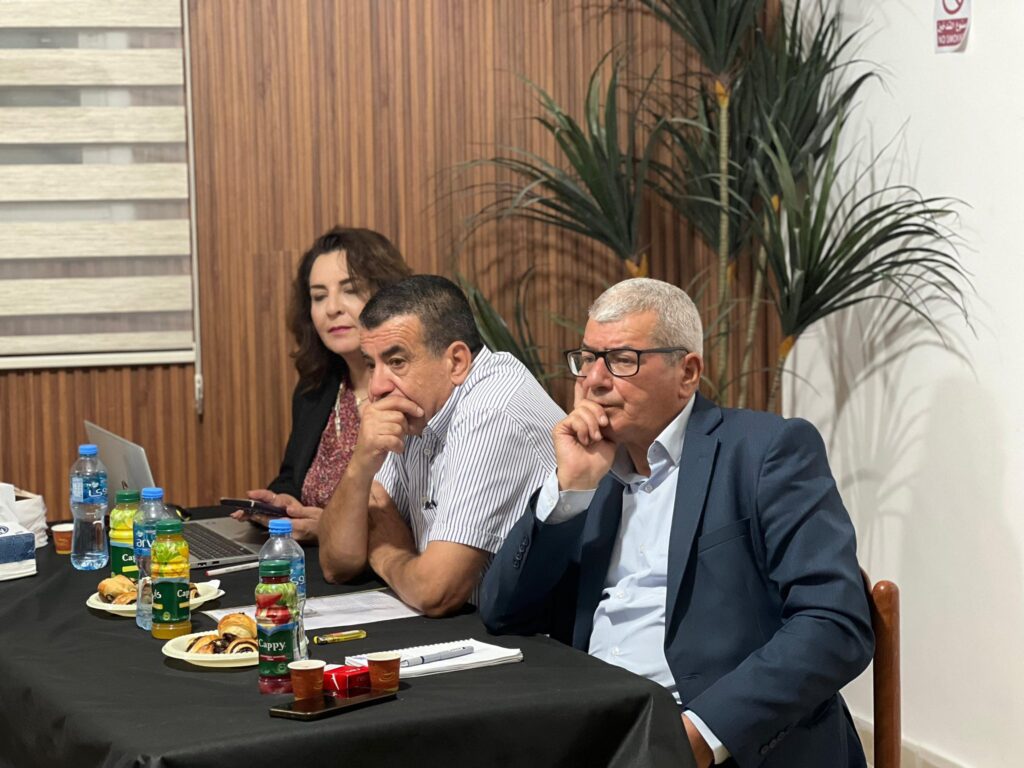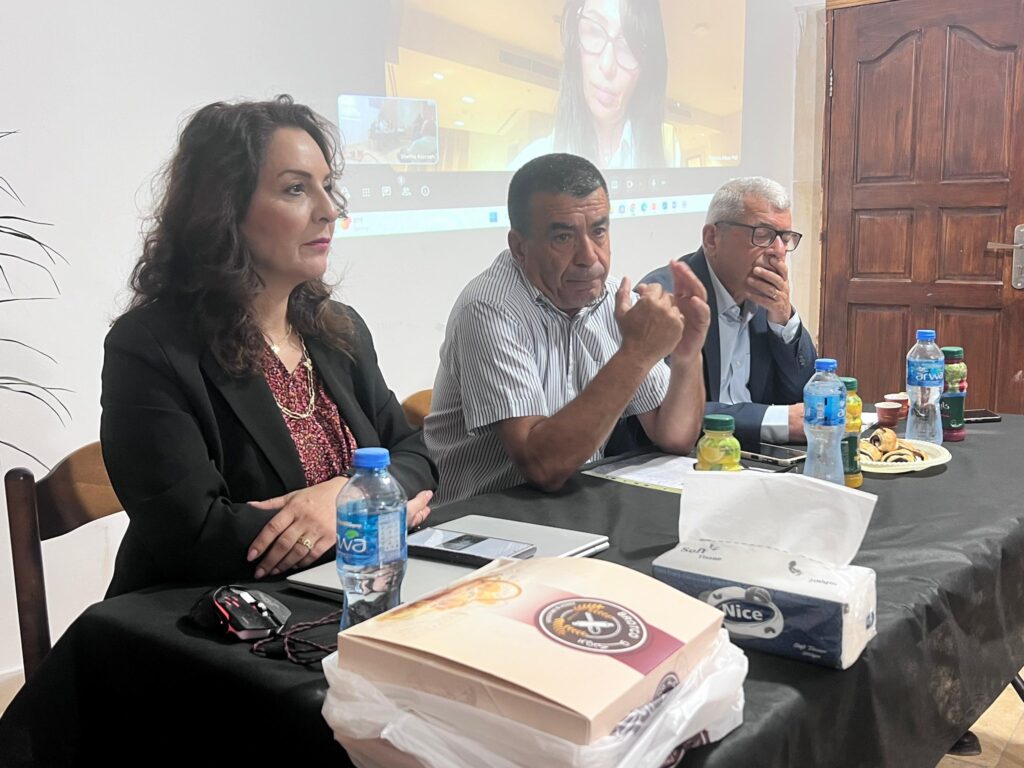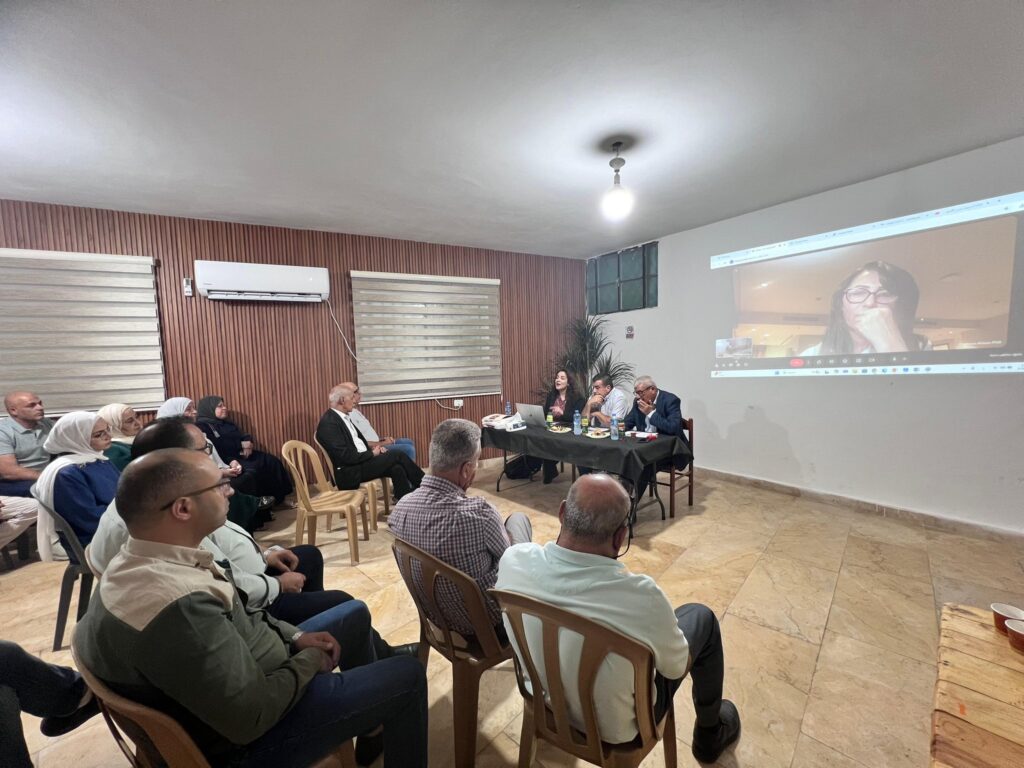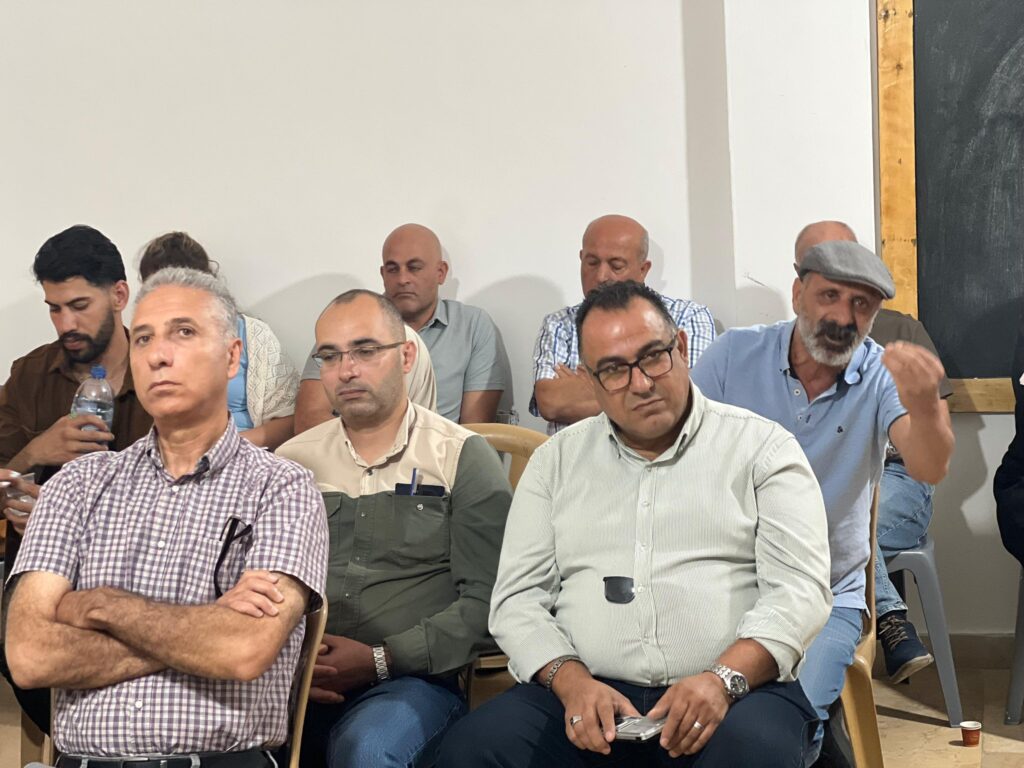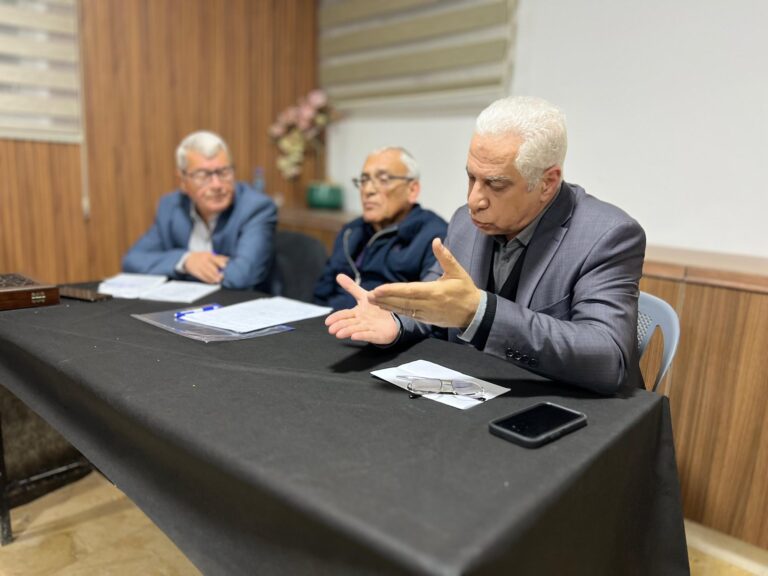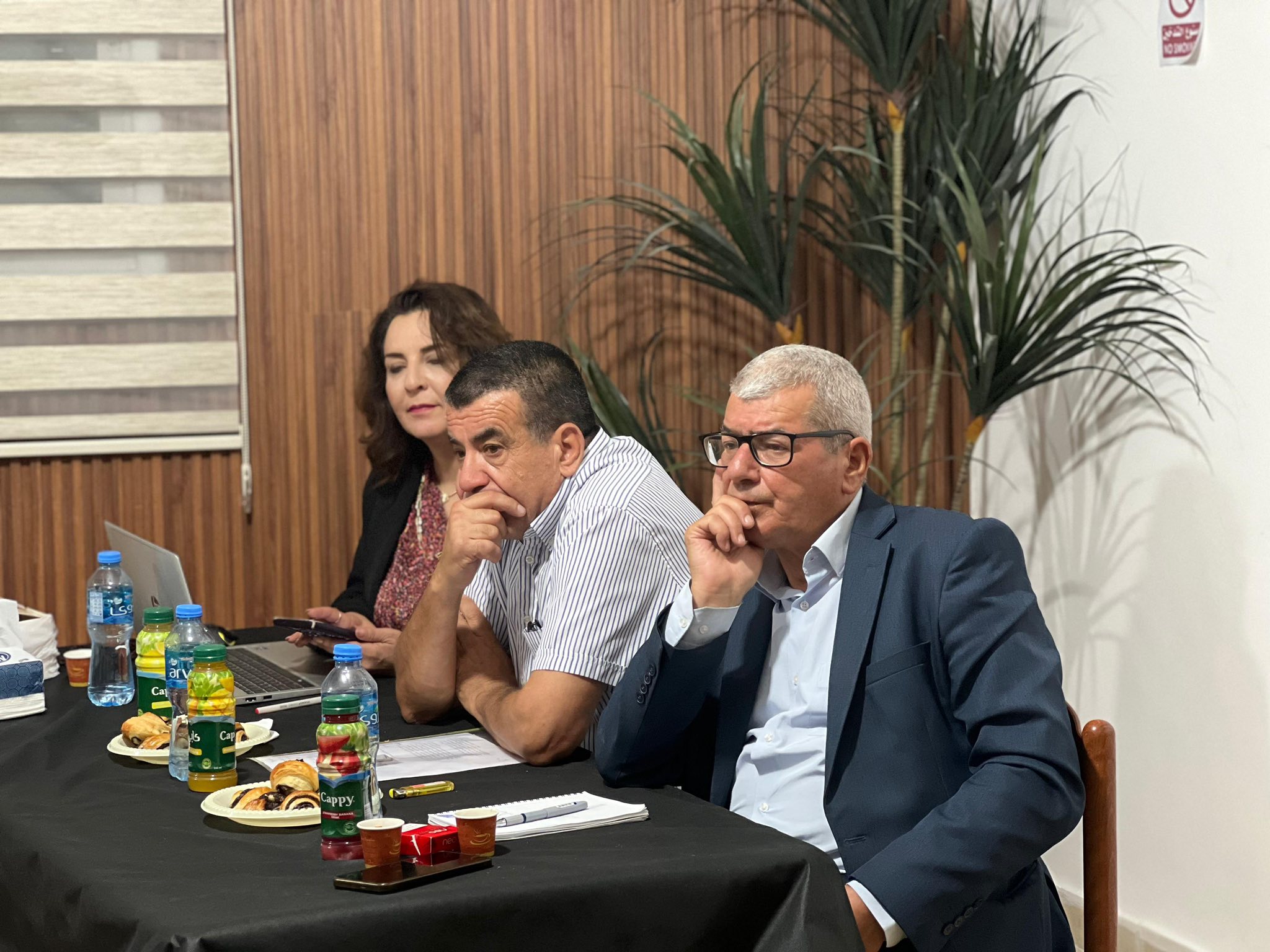

On Saturday, September 20, 2025, a discussion session was held on the article “A House on the Back… When the Mobile Home Becomes a Remnant of Survival”, with the participation of Dr. Firdous Abdel Rabbo Al-Issa via Zoom, alongside Dr. Nathalie Al-Tawil, Mr. Issa Qaraqe, and Mr. Fuad Al-Lahham.
The discussion drew upon the article’s reflections on the meaning of “home” in the context of war and genocide. As the article states: “In Gaza … the mobile home is a forced concept, tied to uprooting, erasure, displacement, and spatial as well as collective genocide …”. The speakers highlighted this profound shift in the symbolism of home, from being a space of safety and stability to a fragile symbol of temporary survival.
The session also reflected on the passage: “The home turns into a bag that carries remnants of life … borne on exhausted, hungry bodies, frightened and fleeing from death and bombardment …”. The panel emphasized that this image encapsulates the humanitarian tragedy in Gaza, where the “home” has become a burden to be carried rather than a permanent shelter.
A special focus was given to the gendered dimension of the article, which states: “… Palestinian women view the home as an extension of their feminine bodies, a place of care, intimacy, and motherhood … its violation means the destruction of these daily roles …”. The participants stressed that this dimension reflects the central role of women in Gaza amid the ongoing genocide, where women embody resilience and act as guardians of memory and place.
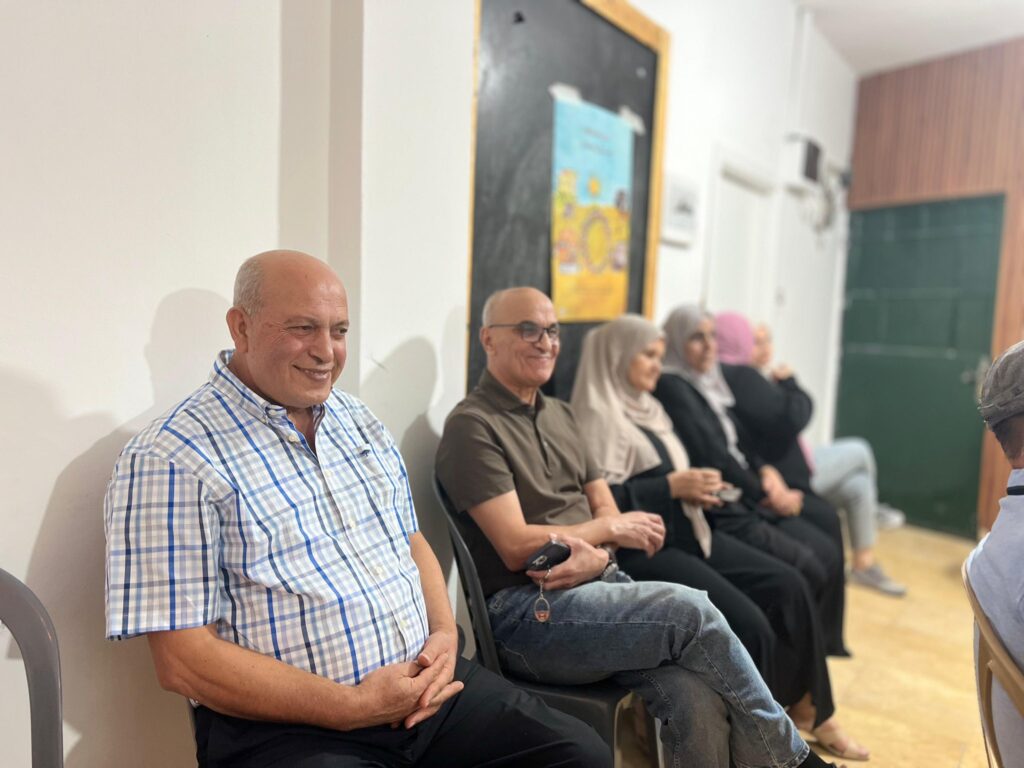
The session witnessed the presence of a distinguished group of participants whose deep questions and interventions enriched the dialogue, adding intellectual and human value, and reaffirming the cultural and political significance of the article as part of the ongoing Palestinian testimony against aggression and displacement.
عُقدت أمس السبت، 20 أيلول 2025، جلسة مناقشة لمقالة بعنوان “بيت على الظهر… عندما يتحول المنزل المتنقّل إلى بقايا نجاة”، للدكتورة فردوس عبد ربه العيسى حيث حضرت عبر تقنية “زووم”، وبمشاركة الدكتور نتالي الطويل، والأستاذ عيسى قراقع، والأستاذ فؤاد اللحام.
استند النقاش إلى ما طرحته المقالة من رؤى حول معنى “البيت” في سياقات الحرب والإبادة، إذ جاء فيها: «في غزّة … فالبيت المتنقّل مفهومٌ إجباري يرتبط بالاقتلاع والمحو والتهجير والإبادة الجماعية والمكانية …». وقد ناقش المتحدثون هذا التحوّل العميق في دلالة البيت من كونه مساحة أمان واستقرار إلى كونه رمزًا للبقاء المؤقت والهشاشة.
كما توقفت الجلسة عند المقطع الذي جاء فيه: «تحوّل البيت حقيبة تحوي بقايا حياة … يحمل على الأجساد المنهكة والجائعة الخائفة والهاربة من الموت والقصف …»، حيث أكد المتحدثون أن هذا المشهد يلخص المأساة الإنسانية التي يعيشها الفلسطينيون في غزة، ويجعل من “البيت” عبئًا محمولًا بدلًا من أن يكون مأوى دائمًا.
وتناول النقاش أيضًا البعد الجندري للمقالة، إذ ورد فيها: «… النساء الفلسطينيات يرين البيت امتداداً لأجسادهن الأثنوية، ومكاناً للرعاية والحميمية والأمومة … واقتحامه يعني تدمير هذه الأدوار اليومية لهن …». وقد أكد المشاركون أن هذا البعد يجسد الدور المحوري للنساء في غزة في مواجهة حرب الإبادة، حيث تتحول المرأة إلى رمز للصمود وحافظة
لذاكرة المكان.
وشهدت الجلسة حضورًا نوعيًا من مجموعة من المشاركين الذين أثروا الحوار بمداخلات وأسئلة عميقة، مما أضاف قيمة فكرية وإنسانية للنقاش، ورسّخ البعد الثقافي والسياسي للمقالة كجزء من الشهادة الفلسطينية المستمرة على العدوان والتهجير